Etoolab Electric Pressure Washers Built for Real Work
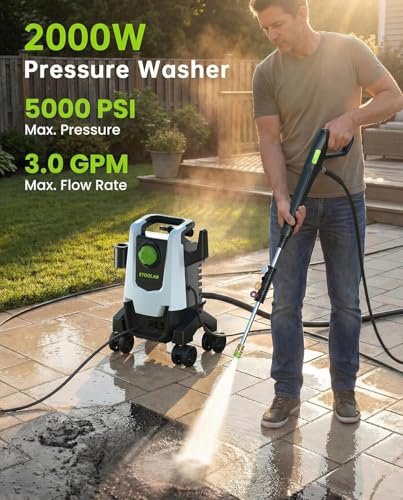
The Etoolab pressure washer line delivers 5,000 PSI and 3.0 GPM across two models — the W90-G and the W80 — each bundled with a foam cannon, four quick-connect nozzles, and a 23-foot high-pressure hose. These machines are built for homeowners who want to clean driveways, fences, vehicles, and patios without renting a unit or wrestling with a gas engine.
Links to Amazon on this page are affiliate links — as an Amazon Associate, etoolab.net earns from qualifying purchases at no extra cost to you.

Both Models at a Glance
W90-G Pressure Washer — 35ft GFCI
See on Amazon
W80 Pressure Washer — White
See on AmazonSide-by-Side Specifications
Both Etoolab pressure washers share the same core output specs. The differences come down to cord length, color, and physical footprint — here's the full comparison.
| Model | Max Pressure | Flow Rate | Hose Length | Power Cord | Dimensions (L×W×H) | Color | Best for |
|---|---|---|---|---|---|---|---|
| W90-G | 5,000 PSI | 3.0 GPM | 23 ft | 35 ft GFCI | 11.8 × 9.8 × 18.1 in | Black | Larger properties, outlets far from the work area, compact storage |
| W80 | 5,000 PSI | 3.0 GPM | 23 ft | AC (standard) | 12.9 × 10.6 × 18.9 in | White | Driveways, vehicles, and patios with a nearby outlet |
If your outlet is within 20 feet of the job and cord reach isn't a concern, either machine delivers identical cleaning output. If you regularly work far from an outlet — back fence lines, the far side of a large driveway — the W90-G's 35-foot GFCI cord makes the session noticeably less frustrating.
How to Choose Between the W90-G and the W80
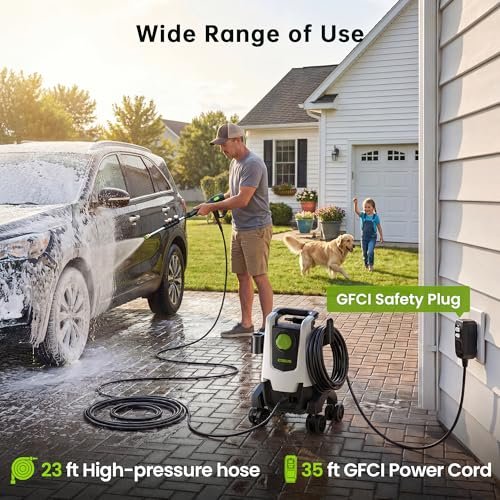
Both the W90-G and W80 share the same core specs: 5,000 PSI maximum pressure, 3.0 GPM flow rate, a 23-foot hose, four quick-connect nozzles, and a foam cannon. The meaningful difference is the power cord. The W90-G ships with a 35-foot GFCI power cord built in — that's 12 extra feet of reach compared to a standard setup, and the GFCI protection is integrated into the cord itself. The W80 is rated for AC power and operates at the same pressure and flow, but the cord length isn't listed at 35 feet, making the W90-G the stronger choice if your outlet is far from your driveway or the far end of a fence line.
A few other selection factors worth thinking through:
- Reach from the outlet. If your nearest outdoor outlet is more than 20 feet from the work area, the W90-G's 35-foot cord gives you real flexibility. The W80 is better suited to jobs closer to the source — car washing in the driveway with an outlet nearby, for example.
- Color preference and footprint. The W90-G is black and measures 11.8 × 9.8 × 18.1 inches. The W80 is white and runs slightly larger at 12.9 × 10.6 × 18.9 inches. Both are upright units. If garage storage space is tight, the W90-G's slightly smaller footprint is a genuine advantage.
- Ratings confidence. Both are solid. If you weigh buyer feedback heavily, check the current ratings on each Amazon listing before deciding — they move as more reviews come in.
If you plan to use this machine across a large property — rinsing the back fence, cleaning the patio, then moving to the front driveway in a single session — the W90-G's longer cord and smaller footprint make it the more practical daily driver. For buyers with a shorter run to the outlet and no preference on cord length, the W80 delivers identical cleaning performance at the same specs.
Matching Nozzles to Surfaces Before You Start
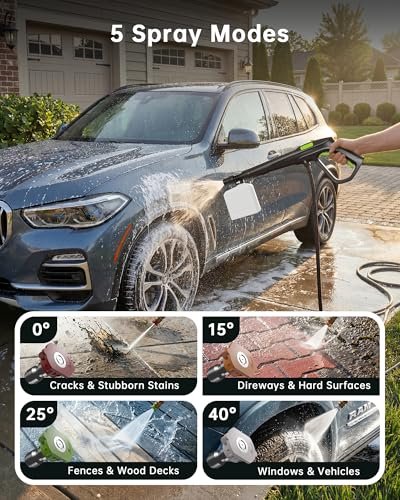
At 5,000 PSI, choosing the wrong nozzle is not a small mistake. All four quick-connect nozzles included with both Etoolab models are color-coded, and each is built for a specific type of surface and task. Using a 0° nozzle on a car panel or a wood deck at full pressure will cause visible damage. Here's how to think through each option before you pull the trigger:
- 0° (red) nozzle. A pinpoint stream at full pressure — 5,000 PSI concentrated into a spot roughly the diameter of a pencil. This is for concrete staining, removing paint from masonry, or clearing stuck-on grease from engine block surfaces. Keep it moving constantly. Do not point it at wood, plastic, or painted metal.
- 15° (yellow) nozzle. A narrow fan useful for stripping algae from concrete, cleaning heavy mud from tires and wheel wells, and prepping concrete before sealing. Still aggressive — hold it at least 6 inches from the surface and keep the wand moving.
- 25° (green) nozzle. The general-purpose setting. Decks, fences, siding, patio furniture, and brick all respond well to the 25° fan. This is the nozzle most homeowners will use 80% of the time.
- 40° (white) nozzle. A wide, gentle fan for car washing, glass, soft wood, and any surface where you want pressure to rinse rather than strip. At 3.0 GPM, the flow rate keeps rinsing fast even at the lower fan angle.
- Foam cannon. Attach this to the gun, fill the 600mL bottle with diluted car wash soap or detergent, and apply a thick foam layer before scrubbing or rinsing. It significantly reduces the time spent scrubbing individual panels on a car or the surface area of a large deck.
One practical note on GPM: 3.0 gallons per minute is a strong flow rate for a residential electric unit. Higher flow means loose debris and soap rinse away faster — which matters on large surfaces like driveways and long fence sections. PSI breaks the bond; GPM clears the mess. Both numbers are doing real work here.
Safe Operation, Storage, and Common First-Use Mistakes
The GFCI cord on the W90-G is the most important safety feature on any electric pressure washer, and it's worth understanding what it does: a ground fault circuit interrupter cuts power within milliseconds if it detects current flowing somewhere it shouldn't — through water, through a puddle, through a person. Never use an electric pressure washer that doesn't have GFCI protection, and never defeat or bypass the GFCI plug. If it trips during a session, unplug the unit, inspect the cord and connections for moisture or damage, let everything dry, and reset before continuing.
The most common mistake on first use is pulling the trigger before the machine has fully pressurized. Turn the unit on, squeeze the trigger to clear air from the line, and let the system stabilize for five to ten seconds before switching nozzles or attaching the foam cannon. On the same note: always release pressure from the hose before disconnecting a nozzle — point the gun at the ground and squeeze the trigger after shutting the machine off to bleed the line.
- Winter storage. Water left in the pump and hose will expand when it freezes and crack internal components. Before storing for the off-season, run the pump briefly with the trigger squeezed to push remaining water out. Store the unit indoors or in a space that stays above freezing.
- Hose kinking. The 23-foot hose is long enough to reach most residential surfaces without repositioning the machine, but a sharp kink under pressure will shorten the hose's lifespan. Uncoil the full hose before each use rather than dragging the machine to take up slack.
- Surface testing. Before running the 25° nozzle across an unfamiliar surface — older deck boards, painted block walls, stucco — test a small, inconspicuous area at about 18 inches of distance. Different paints, sealants, and wood ages respond differently even at the same PSI.
- Detergent in the foam cannon. Use only pressure-washer-compatible soaps in the foam cannon bottle. Standard dish soap can create excess foam inside the pump housing over time. Car wash concentrate or purpose-formulated deck cleaner diluted per the manufacturer's instructions is the right choice.
Both units are AC-powered, which means no battery management and no runtime limit — you can run through a full driveway, a fence line, and a car without stopping to recharge. The trade-off versus a gas unit is cord management, not power; 5,000 PSI is more than sufficient for anything a residential property requires.
Frequently Asked Questions
Is 5,000 PSI safe to use on a car?
Not with the 0° or 15° nozzle — that pressure level on a narrow stream will strip clear coat and damage painted panels. For car washing, use the 40° (white) nozzle at 18–24 inches of standoff distance, or apply soap through the foam cannon and rinse with the 40° tip. The machine's flow rate of 3.0 GPM makes rinsing fast even at the gentler nozzle angle.
Do I need a separate GFCI outlet, or is the W90-G safe to plug into a standard outdoor receptacle?
The W90-G has GFCI protection built into the power cord itself — you don't need a GFCI outlet at the wall. The protection travels with the machine. If you're using the W80, confirm that your outdoor outlet is GFCI-protected before connecting any electric pressure washer to it. This is a basic safety requirement for any electric washer used near water.
Can I use regular dish soap in the foam cannon?
It's not recommended for regular use. Standard dish soap produces excess suds that can work their way into the pump housing over repeated sessions. Use a pressure-washer-compatible car wash concentrate or purpose-formulated deck or surface cleaner, diluted according to the product label. Most are inexpensive and the foam cannon's 600mL bottle gives you a full session on a single fill.
Will either model handle stripping algae and mold from a concrete driveway?
Yes — that's one of the most effective uses for these machines. Start with the 15° (yellow) nozzle for heavy algae buildup, working in overlapping passes at about 8–12 inches from the surface. For lighter staining or general maintenance cleaning, the 25° (green) nozzle is sufficient and covers ground faster. At 3.0 GPM, the rinse keeps pace with the pressure, so loosened debris clears quickly rather than sitting in puddles.
How should I store the machine at the end of the season?
Run the pump for 30 seconds with the trigger squeezed after shutting off the water supply — this pushes standing water out of the pump and hose, which is the main cause of winter damage. Store the unit in a space that stays above freezing; a garage, basement, or heated shed all work. Coil the hose loosely rather than wrapping it tightly around the machine, which causes kinking and premature cracking at stress points.
The listing says 5,000 PSI — is that the working pressure or the maximum?
5,000 PSI is the rated maximum output — the peak pressure the pump can produce with the 0° nozzle fully open. Working pressure at wider nozzle angles (25°, 40°) will be lower, which is actually appropriate: you want less concentrated force on decks and vehicles, and the machine delivers that naturally based on nozzle selection. For reference, most professional residential cleaning contractors work between 2,500 and 3,500 PSI for surface washing — this machine gives you headroom to go harder when the surface calls for it.